Dr. Dale Shelton Deas Jr. is running for U.S. Senate in Alabama's May 19, 2026 Republican primary because federal institutions failed him, and he knows they're failing Alabama families too. As a cardiac surgeon whose career was destroyed by Emory Healthcare for testifying against malpractice, Dr. Deas watched regulatory agencies abandon him, federal law enforcement refused to act, and understood that the political system itself has been captured by billionaire donors and corporate special interests. The only accountability mechanism left is the ballot box.
Unlike his opponents Steve Marshall, Barry Moore, and others defended by Katie Britt and Tommy Tuberville, Dr. Deas accepts zero corporate PAC money, zero billionaire donations, and zero special interest funding. Every dollar comes from working Alabama families. He's not running to join the political machine. He's running to expose it, dismantle it, and return the Senate to its proper purpose: serving the people who elected him, not mega-donors who financed his campaign.
During his cardiothoracic surgery training at Emory University, Dr. Deas served as a star witness in two major malpractice cases involving surgeon misconduct that seriously harmed patients. One ended in death. These weren't minor disputes, they represented approximately $100 million in institutional liability exposure. Rather than address the malpractice, Emory retaliated against the surgeon who testified truthfully.
What happened next reveals exactly how institutional corruption works. Emory promoted the defendant surgeon to directly supervise Dr. Deas's training. The message was clear: testify against us and face consequences. Then, weeks before Dr. Deas would have been certified for independent practice, a credential worth approximately $750,000 to $800,000 annually to start, growing to $2+ million over a career, Emory used manufactured peer review violations and terminated him on April 21, 2025.
The timing wasn't coincidental. Dr. Deas was nine weeks away from his original graduation date when he was fired. Emory knew his removal would cost him a multi-million-dollar surgical career. Yet they did it anyway, despite knowing about the malpractice cases for two years but concealing them from him until the final moment.
David Schoen, the nationally renowned civil rights attorney who has represented President Trump, investigated Dr. Deas's case. Schoen's assessment was devastating: "The treatment of my client by Emory is the worst treatment I have ever seen a group of doctors treat another doctor in my 35-year career." When your own attorney's characterization of institutional retaliation is described as the worst he's witnessed in 35 years of defending prominent cases, the corruption is undeniable.
But here's what makes this relevant to Alabama voters: the same pattern that destroyed Dr. Deas's career is the same pattern that's destroying Alabama. Institutional capture. Retaliation against those who expose wrongdoing. Federal agencies that should be enforcing law participating in cover-ups instead. Political figures defended by special interests while working families suffer.
By November 3, 2025, Dr. Deas had exhausted every institutional channel available to him. He had reported patient care malpractice and civil rights violations to Emory leadership, and they responded by having the defendant surgeon, now his program director, terminate him. He had testified as an expert witness in two major malpractice cases, contributing professional expertise that exposed patient harm. He had been terminated four weeks before his originally scheduled graduation, a calculated decision that destroyed his financial future. He had filed formal complaints with the Department of Labor, the Equal Employment Opportunity Commission, the Health and Human Services Office of Civil Rights, and the HHS Office of Inspector General. He had reported everything to FBI Houston Special Agent Cooper Ferreira that he had at the time, who ghosted him after February 26, 2025. He even had documented witness tampering through audio recordings where attorneys explicitly solicited the destruction of evidence.
Exhausted by institutional failure, Dr. Deas and his spouse reported the complete fraud scheme to FBI Special Agent Kathryn Cordes at the Atlanta Field Office on November 3, 2025. They disclosed active physical surveillance of their residence. They reported threats against their family. They discussed senators taking bribes. They presented evidence of a coordinated cover-up protecting billions in fraudulent securities transactions.
Then Dr. Deas asked the question that every whistleblower asks federal law enforcement: "We're being physically surveilled. We're at risk. Can you relay us to the U.S. Marshals office for witness protection evaluation?"
Special Agent Cordes's response crystallized everything: "If you ever feel threatened, reach out to the local police department."
Federal crimes. Interstate jurisdiction. Sitting senators. Multi-billion-dollar fraud. Active surveillance of the whistleblower's home. Federal response: Call local police.
That moment when the FBI itself told a whistleblower with documented federal crimes and active threats to call his local police department was when Dr. Deas understood that the system isn't broken. It's captured. Federal law enforcement wasn't investigating; it was participating in the cover-up. Regulatory agencies weren't enforcing; they were enabling. The political system had been hijacked by special interests so completely that institutions designed to enforce law had become mechanisms of suppression.
Dr. Deas faced a choice: stay quiet and protect what remained of his career, or exercise his First Amendment right to petition the government directly. The Constitution provides a remedy when institutions fail: the electoral process. Citizens have the right and responsibility to run for office, appeal to voters, and demand accountability from the ballot box.
"That response crystallized everything," Dr. Deas said. "When federal agents investigating federal crimes tell a whistleblower to call local police, the system has failed. Direct petitioning through the electoral process is the only accountability mechanism left."
He announced his Senate candidacy nine weeks later, on January 15, 2026.
The Department of Labor is investigating allegations that Emory Healthcare violated mandatory whistleblower protection requirements. A key witness in Dr. Deas's case was terminated just two weeks after being named in an amended complaint, raising serious concerns about witness tampering, concerns that federal investigators should prioritize but appear to have overlooked amid regulatory capture. In its current state, Emory represents an unsafe and unregulated healthcare environment, unfit for medical practice while its leadership remains entangled in a criminal cover-up.
Dr. Deas's experience at Emory isn't an isolated incident. It's a blueprint for how institutional capture works in America. The same pattern destroys careers in healthcare, undermines small businesses, and hollows out the middle class. The difference is that Dr. Deas is connecting the dots publicly and demanding accountability.
Consider how the pattern repeats: A system benefits from the status quo. Someone inside that system exposes wrongdoing. Rather than address the wrongdoing, the system retaliates against the person who exposed it. Federal agencies that should intervene either look the other way or actively participate in the cover-up. Those with political connections profit from the arrangement. Working families pay the price.
In healthcare, this pattern means patients are harmed when surgeons commit malpractice and institutions protect them. In politics, this pattern means Alabama families go bankrupt while politicians accept bribes from special interests in exchange for government contracts and policy favors.
Katie Britt received $625,000 from billionaire Raymond Harbert during her 2022 Senate race. FEC records SA11AI.4193, SA11A.40, and SA11A.18095 document these donations. Harbert's 8.1 billion AUM hedge fund and his cousin Billy Harbert's BL Harbert International government contracting and construction business profit directly from Space Command contracts. That's how the system works: billionaires donate hundreds of thousands to politicians who then deliver government contracts, tax breaks, and policy favors in return.
The same donors who fund Katie Britt and Tommy Tuberville have backed Steve Marshall and Barry Moore, the primary opponents Dr. Deas faces in this race. All of them are bought and paid for by the system that destroyed Dr. Deas's career. Nothing changes under their watch because they benefit from the status quo.
Meanwhile, Alabama families struggle. Nurses can't afford healthcare on what hospitals pay them. Teachers work second jobs because education funding remains inadequate. Rural hospitals close as corporate healthcare systems consolidate with political help. Families choose between medications and rent. Children go to bed hungry while parents work full-time jobs. This isn't because Alabama lacks resources, it's because resources are systematically redirected to serve billionaire interests instead of working families.
Dr. Deas is running for Senate because he's been destroyed for fighting corruption, and Alabama families deserve someone who will keep fighting, no matter the cost. Unlike his opponents, he's refusing all corporate PAC money, all billionaire donations, and all special interest funding. Every dollar comes from working Alabamians. That means he answers to the people, not to mega-donors.
In sharp contrast to his opponents, Dr. Deas's campaign accepts zero dollars from corporate PACs, zero contributions from special interest committees, and zero donations from billionaires or mega-donors. Every single contribution comes from individual Alabama families who believe in fighting corruption. He has pledged to return any donations from special interest groups, signaling a commitment to campaign funding entirely free from corporate influence.
This isn't virtue signaling, it's structural accountability. When a candidate accepts corporate PAC money, those corporations expect policy favors. When billionaires donate $625,000 to a campaign, they expect government contracts and tax breaks. When special interests fund a politician's campaign, that politician's loyalty shifts from voters to donors. Dr. Deas is refusing that entire arrangement.
Steve Marshall, Barry Moore, and Dr. Deas's other opponents combined have raised millions from corporate special interests and billionaire networks. Dr. Deas is building something fundamentally different: a grassroots movement where 1,000 Alabama families who donate $25 each have more collective power than one billionaire donating $625,000.
"I'm not here to join the political machine," Dr. Deas said. "I'm here to expose it and tear it down. I've already sacrificed my career for integrity. I'm not stopping now. Alabama families deserve a senator who remembers who sent them to Washington and stays loyal to the people, not to mega-donors."
Dr. Deas is launching a people-powered fundraising campaign emphasizing small-dollar donations from working families. His team is actively recruiting supporters in all 67 Alabama counties and building volunteer networks through digital organizing and direct community outreach. With >100 days remaining until the May 19 primary and opponents' combined $2 million special interest war chests, Dr. Deas needs 1,000 Alabama families giving $25 each to prove that Alabamians, not billionaires, will decide who fights corruption in Washington.
Founding Members who donate by February 8, 2026 receive a personalized thank-you video from Dr. Deas, an exclusive "Founding Member" car sticker, direct monthly campaign strategy updates, and invitations to quarterly strategy calls. Every contribution directly supports voter outreach, digital advertising, grassroots organizing, and debate preparation.
The point is simple: Alabama families have more power than billionaires when they organize collectively. This campaign proves it.
Alabama voters consistently rank healthcare costs as their top concern. Yet every major candidate in this race relies on advice from healthcare lobbyists who've never treated a patient, never placed a central line at 2 AM, and never made life-or-death decisions under pressure. Dr. Deas brings something none of his opponents can offer: direct frontline experience in America's most complex healthcare environments.
As a cardiac surgeon, Dr. Deas has witnessed firsthand how financial incentives drive clinical decisions, often contrary to patient welfare. He's transferred transplant patients from bed to operating room table infected, washing them out day after day under surgeon orders to keep them alive, not for optimal patient outcomes, but for hospital metrics and Medicare reimbursement continuation. Heart transplant patients have Medicare DRG payment thresholds at 51 days; once a patient crosses that threshold, the hospital receives additional payment for each additional day of hospitalization. Dr. Deas has watched surgeons extend ICU stays and interventions beyond medical necessity to trigger outlier reimbursement. The financial incentive is explicit: keep the patient alive and hospitalized past day 51, and both the surgeon's metrics and the hospital's revenue increase. That's not medicine, that's billing disguised as patient care.
When examining Emory Healthcare's past 12 Form 990s, the pattern becomes apparent: they've operated at a loss year after year. Prolonging patient stays and acquiring hospitals like Houston Healthcare are desperate measures to close that financial gap. The institution's financial interests directly conflict with optimal patient care, and patients suffer the consequences.
This experience informs Dr. Deas's comprehensive healthcare policy platform, developed entirely without pharmaceutical company influence or hospital lobbyist input:
Prescription Drug Reform: Prescription drug prices are crushing Alabama families. The solution is eliminating pharmacy benefit manager (PBM) monopolies and allowing Medicare to negotiate drug prices directly with manufacturers. This removes the corporate middlemen who extract billions while patients choose between medications and rent. Dr. Deas will fight to ensure affordable medications are available to every Alabamian.
Rural Healthcare Protection: Rural hospitals are closing across Alabama as healthcare consolidates. Alabama's rural healthcare crisis is worse than Georgia, Tennessee, and Florida combined, 28 hospitals (58%) at closure risk. Twenty-two face closure within 24 months, affecting hundreds of thousands of Alabamians. Family members in small towns now drive 45+ minutes for emergency care. Dr. Deas will protect rural hospitals by reforming CMS reimbursement formulas that favor consolidated corporate healthcare systems. Every Alabamian deserves access to emergency care within 30 miles of home. This requires federal policy reform that incentivizes rural healthcare sustainability rather than consolidation.
Insurance Company Accountability: Insurance companies routinely override doctors' medical decisions about patient care through arbitrary prior authorization denials and step-therapy requirements. These bureaucratic delays prevent patients from receiving life-saving treatments. Dr. Deas will demand that insurance companies cease overriding physician judgment and will establish federal standards protecting patients' right to recommended treatments.
Healthcare Innovation: America leads the world in medical breakthroughs because we invest in biomedical research. Dr. Deas holds a biomedical engineering degree from Vanderbilt University and understands the critical importance of federal funding for healthcare innovation.
Alabama is positioned to become the nation's center for cardiovascular and space medicine research through a Birmingham-Huntsville-Mobile research partnership. UAB's world-class medical expertise, UAH's engineering programs supporting Space Command, and USA Health's naval medicine partnerships create unique opportunities no other state can match.
Dr. Deas will fight for federal research grants establishing the Alabama Medical Innovation Corridor, creating thousands of high-wage research jobs while keeping America ahead of China in healthcare and military medicine innovation. This is Alabama's competitive advantage in the 21st century economy.
Anti-Fraud Enforcement: Healthcare fraud costs the system billions annually and drives up costs for everyone. More importantly, whistleblowers who report fraud face systematic retaliation, witness tampering, and intimidation. The Department of Labor is currently investigating whether Emory violated mandatory whistleblower protection requirements in Dr. Deas's case. Federal law needs teeth: retaliation, intimidation, and witness tampering must be prosecuted to the fullest extent. Healthcare workers reporting fraud deserve protection, not punishment.
"Washington is full of lawyers who've never treated a patient, never placed a central line at 2 AM, never transferred a septic patient to the OR at midnight," Dr. Deas said. "The Senate needs someone who understands healthcare from the inside, not from a lobbyist's PowerPoint. I've seen what works and what doesn't. I've seen how financial incentives drive clinical decisions. Alabama deserves a Senator who will fight for patients, not special interests."
Institutional Accountability and Transparency Reform
Abolishing Offshore Insurance Shells: Healthcare institutions have weaponized captive insurance companies operating in tax havens, specifically the Cayman Islands, to conceal malpractice settlements that should be disclosed to bond investors. Emory University established Clifton Casualty Insurance Company Limited (100% owned, Cayman Islands incorporated) precisely for this purpose: to operate as a shell that receives hundreds of millions in insurance premiums from Emory, then, upon information and belief, invests those reserves in the very bonds Emory issues to the public. This creates a circular capital flow designed to obscure the true financial condition of the institution. When Harrison Willson, a 15-year-old child with congenital heart disease, died from an experimental surgery he never should have undergone, a procedure performed by a surgeon with no experience in truncus arteriosus repair, that death was never disclosed in the $351.4 million bond offering sold seven months later (Series 2016A and 2016B). The death was concealed through Emory's relationship with Clifton Casualty, through criminal means of obstruction of justice and attorney abandonment, never forcing disclosure to bondholders. As U.S. Senator, I will fight to abolish this structure entirely. U.S. healthcare institutions that require captive insurance for legitimate risk management can establish regulated domestic captives in Vermont, Delaware, or other U.S. jurisdictions with full SEC and state insurance oversight. The Health Care Fraud and Transparency Act will: (1) prohibit U.S. healthcare institutions from establishing or maintaining offshore captive insurance subsidiaries; (2) require all settlements exceeding $500,000 to be disclosed in real-time to securities regulators and bond rating agencies; (3) criminalize the use of insurance structures to conceal patient harm from investors; and (4) give Securities and Exchange Commission authority to impose immediate civil penalties on institutions using offshore structures to facilitate securities fraud. Patients died because bond rating agencies were lied to. That ends when I'm your senator.
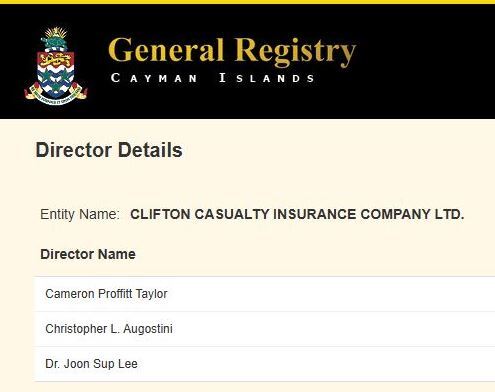
Auditor Independence Restored- Breaking the Conflict Trap: KPMG, one of the Big Four Auditing Firms, has systematically exploited a loophole in auditor independence standards that allows a single auditor to serve as the external auditor for competing entities where the same individual sits on multiple boards and controls the audit relationship. KPMG audited Emory University, Clifton Casualty Insurance (the offshore captive), AND Baker Hughes, where John G. Rice served as Audit Committee Chair through May 2025 and currently serves as Lead Independent Director. But the conflict extends further: KPMG also audits W.R. Berkley Corporation, where Emory's Chief Financial Officer Christopher L. Augostini chairs the Audit Committee. W.R. Berkley, one of the top ten insurance providers in the energy market, has previously provided reinsurance coverage to Emory. Additionally, Emory maintained reinsurance coverage with Lexington (part of AIG), where John G. Rice serves as Lead Independent Director. Augostini, along with Emory CEO Dr. Joon S. Lee and Emory's Vice President of Government and Community Affairs Cameron Proffitt Taylor, serve as Directors of Clifton Casualty Insurance Company, Ltd.(see image below), creating direct overlap between the three entities KPMG audits. Baker Hughes and several LNG export facilities also use AIG for their reinsurance, creating interconnected financial dependencies that all flow through the same auditor. Most damning: Emory stopped disclosing which insurance companies they contracted with in their financial disclosure statements beginning in 2013, precisely when this interlocking arrangement began to take shape.
This created an impossible conflict: KPMG could not report fraud at Emory without triggering reinsurance claims at Clifton, which would affect KPMG's relationship with Rice at AIG and Baker Hughes, and with Augostini at W.R. Berkley. In practice, KPMG issued two separate audit opinions in 2024-2025: a "clean" opinion in December 2024 (used to market $862.7 million in bonds to unsuspecting investors) and a "significant deficiency" opinion in May 2025 (issued quietly days before the fraudulent bonds were sold). This dual-opinion strategy allowed the fraud to proceed undetected. Because of KPMG's willful neglect and oversight failures, patients died. When surgeons are not held accountable for their actions through institutional transparency and auditor independence, death occurs. Harrison Willson, a 15-year-old child, died from an experimental surgery he should never have undergone. Trevon Falson, a 19-year-old patient, died under similar circumstances of surgical misconduct concealed by the same institutional machinery. These are the only patients under age 20 I can document by name; the documented list of patients over age 20 whose deaths resulted from this same pattern of institutional concealment is substantially longer. As U.S. Senator, I will work with the SEC and PCAOB to establish the Auditor Independence Restoration Act: (1) prohibit any external auditor from serving more than one client where a board member serves on multiple boards of those clients; (2) require auditors to disclose all "other client relationships" involving shared board members in every engagement letter filed with the SEC; (3) impose criminal penalties for issuing materially different audit opinions on the same entity to different audiences; and (4) create a mandatory three-year auditor rotation requirement in healthcare and financial services sectors to prevent long-term client capture. Auditor independence rules will have teeth when I'm your senator, and no more patients will die because an auditor chose fees over integrity.
AI Fraud Detection- Mapping the Interlocking Directorate Networks: The most sophisticated fraud detection tool available is largely untapped: artificial intelligence designed to identify interlocking directorates where board members' conflicts of interest mathematically enable systemic fraud. John G. Rice serves simultaneously as Emory Healthcare Board Chair (controlling patient safety decisions), AIG Lead Independent Director (overseeing reinsurance for healthcare claims), and Baker Hughes Lead Independent Director (where he previously served as Audit Committee Chair through May 2025). This triple interlocking created a "hub-and-spoke" conspiracy where suppressing one truth (patient deaths at Emory) protects three separate entities (Emory bond ratings, AIG reserves, Baker Hughes credit ratings). No human analyst caught this because the complexity exceeds normal corporate governance review. But AI systems designed to map conflict-of-interest networks can identify these patterns instantly by analyzing board memberships across institutions, identifying where the same individuals' fiduciary duties conflict, and flagging situations where financial incentives across multiple boards create systematic incentives to suppress disclosure. As U.S. Senator, I will establish the Interlocking Directorate Detection System at the SEC, modeled on the financial crime detection tools used by banking regulators. This system will: (1) require public companies, healthcare institutions, and municipal bond issuers to file comprehensive board relationship datasets annually; (2) use machine learning to identify hub-and-spoke networks where single individuals create irreconcilable conflicts across multiple institutions; (3) automatically flag situations where the same auditor serves clients whose board members conflict; (4) cross-reference institutional investor portfolios to identify situations where institutional investors vote on boards of companies whose securities they hold; and (5) generate quarterly reports to the SEC identifying the most dangerous interlocking directorate networks. Harrison Willson died because a web of board conflicts was too complex for humans to detect. AI will stop the next Harrison before he enters the operating room.
Alabama families are being crushed at the supermarket checkout. Beef and veal prices surged 13-15% in 2025, hitting all-time record highs. Coffee prices jumped 19-41% as supply disruptions sent costs soaring. While egg prices, finally declining in early 2026 after a devastating 2024-2025 avian flu outbreak drove them to $6-8 per dozen, spent most of the past year more than double their historical levels, only three food categories are seeing meaningful price declines: eggs (down 22% as flocks recover), dairy (down 7-18% due to global oversupply), and pork (down 1-3% from modest production increases). Everything else continues rising, with grocery prices forecast to increase another 1.7% in 2026 on top of cumulative increases exceeding 25% since 2023. A family of four that spent $1,000 monthly on groceries in early 2023 is now spending $1,250-$1,300 or more, not because of bad luck or bad harvests, but because of specific policy choices that benefit big agriculture, big food processors, and big retailers while working families suffer the consequences.
The root cause is simple: too few companies control America's food supply. The Big Four meatpackers control 85% of U.S. beef processing, up from 36% in 1980. Cal-Maine Foods alone produces 20% of all U.S. eggs and is under Department of Justice investigation for price manipulation, posting over $1 billion in windfall profits during the avian flu crisis while profit margins per dozen eggs exploded from $0.15 to $1.14. Food manufacturers and processors accounted for over 40% of food price increases since 2020, nearly four times their normal share. Dr. Deas will demand that the Department of Justice enforce antitrust laws, break up monopolies, and restore genuine competition so farmers get fair prices and consumers pay less at checkout. When four companies control 85% of a market, that's not capitalism, that's a cartel.
Federal farm subsidies accelerate this consolidation by funneling disproportionate benefits to massive corporate farms. The largest 10% of farms receive 60% of subsidies while small farms operating over half of farm acreage receive only 16% of indemnities. This upside-down system has eliminated 70,000 farms since 1991. Dr. Deas will redirect agricultural subsidies to incentivize small-to-mid-size farms producing food for local markets, creating rural jobs and lowering food costs through supply chains that don't depend on corporate middlemen extracting monopoly rents.
While Alabama reduced its state grocery tax from 4% to 2% in September 2025, families still pay 5-9% total sales tax on food when local taxes are included, among the highest grocery tax burdens in the nation. Dr. Deas will eliminate Alabama's remaining 2% state grocery tax, saving families $240-360 annually, and work with all 67 counties and hundreds of municipalities to eliminate local grocery taxes, which could save families an additional $360-720 per year depending on location, for combined total savings of $600-1,080 annually. He will also streamline FDA and USDA regulations that crush small meat processors and local food producers, allowing farmers' markets and small producers to operate efficiently and compete with corporate giants. When regulatory costs exclude small producers from the market, consolidation becomes inevitable, and families pay the price through higher costs and fewer choices.
"My opponents take money from corporate agricultural interests," Dr. Deas said. "I take zero PAC money. I answer only to Alabama families. I'm going to Washington to fight corporate consolidation that's destroying affordability and family farms. That's real, concrete action to lower grocery costs, not another stimulus check or empty promises." The fact that the only food categories seeing price relief in 2026 are those with either natural supply recovery (eggs) or competitive market pressures (dairy, pork) proves the fundamental problem: when supply chains function without corporate manipulation, prices come down. Alabama families deserve a senator who will fight consolidation, expose price manipulation, and restore competition to food markets, not one who accepts donations from the same corporations profiting from their pain.
Dr. Deas is running as a principled conservative across all issues. He doesn't compromise on some values while ignoring others. Every element of his platform reflects commitment to conservative principles that make America free:
Protecting Life, Empowering Physicians, Strengthening Families: As both a physician and conservative, Dr. Deas believes in protecting life while ensuring physicians can provide necessary medical care without fear of criminal prosecution. He supports Alabama's pro-life laws with clearer medical emergency exceptions that allow doctors to exercise clinical judgment.
He will fight for complete defunding of Planned Parenthood and redirect every dollar to adoption and foster care reform. He will end Alabama DHR's corruption—including the 'orphan tax' where the state confiscates foster children's Social Security survivor benefits, and the unconscionable practice of placing children in foster care bureaucracy instead of returning them to loving families who already bonded with them when biological parents are deemed unfit. When a biological mother relinquishes a child for adoption but is later found unfit by DHR, that child must be returned to the adoptive family, not warehoused in the foster system. Dr. Deas will demand DHR prioritize children's attachments and family bonds over bureaucratic convenience, eliminate fraudulent relinquishments that exploit struggling parents, and require DHR to place children with relatives or previous caregivers before entering the foster system.
He will champion parental rights, ensuring families, not government bureaucrats, direct children's education and upbringing. Alabama families know what's best for their children, not DHR caseworkers looking to justify budgets.
Second Amendment Protection: The Second Amendment protects individual liberty. Dr. Deas provides unconditional protection of Second Amendment rights. He opposes red flag laws that disarm citizens without due process. He opposes assault weapon bans based on cosmetic features. He opposes government confiscation of legally owned firearms. He supports the right to carry without government permission or bureaucratic licensing schemes that suppress the poor's access to self-defense.
Border Security and Immigration: America must secure its southern border with the same commitment it secures military installations. Dr. Deas will expand deployment of military-grade surveillance drones, AI analytics, and biometric scanners across every critical sector of the southern border. He will fight to ensure the wall's completion in high-traffic areas and maintain every foot of existing barriers. He will ensure Congress fully funds the Trump administration's end to catch-and-release policies and supports secure detention and deportation for illegal entry. He will provide full funding for Border Patrol and National Guard personnel defending American sovereignty. Immigration policy must serve American workers, not foreign populations seeking to displace them.
Election Integrity: Free and fair elections are foundational to American democracy. Dr. Deas will demand strict enforcement of voter ID requirements in every precinct, preventing election fraud while protecting accessibility for elderly and disabled voters. He will ensure all electronic voting systems have voter-verified paper records and require comprehensive post-election audits. He will demand rigorous enforcement of chain-of-custody procedures and transparent documentation for every ballot cast. He will push for prosecution of election fraud to the fullest extent of federal law. Voting is sacred, it must be protected with the same security standards we apply to banking and national security.
Religious Freedom: The First Amendment protects religious liberty. Dr. Deas provides absolute protection for churches, schools, and religious organizations to operate according to their beliefs. He will prevent government mandates that violate conscience and religious belief. He will support religious expression in public life. Government should never coerce citizens into abandoning their faith commitments.
"I'm running as a principled conservative on all issues," Dr. Deas said. "Border security, life protection, Second Amendment rights, election integrity, and religious freedom are non-negotiable. These are foundational American values that make us free. You won't see me trade away religious liberty to win corporate donors. You won't see me compromise on life to appease progressive interests. You won't see me surrender Second Amendment rights to satisfy billionaire gun-control advocates. Conservative principles are the foundation of my campaign, not negotiating positions."
America faces existential competition with China. This competition will be decided by military strength, technological innovation, and industrial capacity. Alabama is positioned to dominate critical sectors of American defense strategy, but only if the next senator fights for Alabama's strategic importance and refuses to let other states capture our competitive advantage.
Space Command and STEM Leadership
Space Command's relocation to Redstone Arsenal in Huntsville has been finalized, transforming Alabama into America's space warfare center. Following President Trump's September 2025 announcement, the transition is already underway. As of January 2026, Space Command has established a Program Management Office at Redstone Arsenal with personnel on the ground and Maj. Gen. Terry Grisham leading the transition. The Guardian force will bring 1,400 direct military and civilian jobs over the next several years, with thousands of military families following. But the opportunity extends far beyond current installations. Dr. Deas will leverage his biomedical engineering and cardiac surgery expertise to strengthen Alabama's critical role in American military dominance.
Space Command personnel require specialized military medicine expertise and cutting-edge research partnerships. Dr. Deas will work directly with UAB Medicine and the University of Alabama to create medical infrastructure and research programs these service members deserve. UAB's cardiovascular and biomedical engineering research will position Alabama as the Center of Excellence for Space Command medical innovation. This creates high-wage research jobs, attracts federal funding, and establishes permanent competitive advantage.
Dr. Deas will cut federal red tape and remove legislative barriers accelerating Space Command deployment. Secretary of War Pete Hegseth committed in December 2025 to "cut every piece of red tape and bureaucracy to get this headquarters established as quickly as humanly possible." Dr. Deas will hold the Pentagon accountable and deliver accelerated implementation, ensuring the transition stays on track and Alabama receives full federal support for infrastructure, workforce development, and facility construction.
He will expand engineering programs at the University of Alabama, Auburn University, UAB, and regional technical colleges to feed Space Command's workforce pipeline. He will establish direct UAB-Space Command partnerships for medical research and military medicine innovation. These commitments create sustainable competitive advantage extending decades beyond any single contract.
Alabama's Space Heritage and Artemis Leadership
Alabama has been America's rocket city since Wernher von Braun and his team developed the Saturn V rocket that put Americans on the moon. That legacy continues today: NASA's Marshall Space Flight Center in Huntsville developed the Space Launch System (SLS) core stage powering Artemis II's manned lunar flyby mission, with launch targeted for February 2026, and Artemis III's return to the lunar surface targeting mid-2027. SpaceX's Starship, the largest and most powerful rocket ever built, will serve as the Human Landing System delivering astronauts to the moon's surface, with NASA's Marshall Space Flight Center managing the entire Human Landing System program that oversees SpaceX's development and integration. Alabama isn't new to space dominance. We built the rockets that won the Space Race, we're building the rockets returning Americans to the moon, and we'll build the systems defending American space assets from Chinese and Russian threats. Space Command's move to Redstone Arsenal isn't a political favor, it's a recognition that Alabama has been the center of American space power for 70 years and will remain so for the next century.
Attracting Next-Generation Defense Technology to Alabama
Space Command's arrival positions Alabama to attract the next generation of defense technology companies. Palantir Technologies, the data analytics firm revolutionizing military intelligence, has secured $217.8 million in Space Force contracts to provide Space Command and Control Data Platform solutions and space situational awareness capabilities. The Pentagon expanded Palantir's Maven Smart System contract to nearly $1.3 billion through 2029, with combatant commands across all domains now depending on Palantir's AI-powered decision-making platforms. Anduril Industries, founded by tech entrepreneur Palmer Luckey, hired retired Lt. Gen. L. Neil Thurgood in 2023 specifically to lead the company's Huntsville expansion at Redstone Arsenal, focusing on counter-drone systems, air and missile defense, autonomous weapons, and command-and-control capabilities.
These companies represent a fundamental shift in defense procurement: moving from slow, bureaucratic legacy contractors to agile tech firms that can deliver software and autonomous systems at the speed of warfare. Palantir and Anduril formed a strategic partnership in December 2024 to integrate artificial intelligence and data processing capabilities across tactical edge systems. Anduril secured a $100 million Pentagon contract to scale its edge data integration services, while Palantir won a $178 million Army contract for the TITAN ground station program, touted as "the first AI-defined vehicle." The companies are now collaborating on Golden Dome, the Space Force's satellite-based missile defense system, with preliminary engineering costs estimated at $10 billion for 400-1,000 tracking satellites and approximately 200 "attack satellites."
"Alabama must compete aggressively for these defense tech companies," Dr. Deas said. "California has been the default location for decades. But Space Command changes that calculation. Huntsville offers proximity to Redstone Arsenal, lower costs than Silicon Valley, a pro-business environment, and STEM talent from UAB, University of Alabama, and Auburn. I'll make sure Alabama's senators fight to bring Palantir, Anduril, and the next generation of defense innovators to Alabama, not just for the tax revenue, but because these companies build the weapons systems that will defeat China. Anduril already chose Huntsville for their expansion under General Thurgood's leadership. That's proof Alabama can win this competition. But we need senators who understand technology and will fight the Pentagon bureaucracy that slows innovation."
Dr. Deas emphasized his unique qualifications: "As a biomedical engineer from Vanderbilt, I understand how Silicon Valley thinks. As a cardiac surgeon, I understand life-or-death decision-making under pressure. And as someone who's been destroyed for exposing corruption, I understand why these companies need senators who will fight the Pentagon bureaucracy that favors legacy contractors over innovation. America needs both, Lockheed Martin and Raytheon build critical platforms like the F-35 and Patriot missiles, and Alabama workers at Lockheed's Troy facility do exceptional work. But Palantir and Anduril are winning contracts precisely because they deliver software and autonomous systems faster than traditional procurement allows. I'll be the senator who ensures Alabama becomes the home for that next generation of defense technology, because Space Command needs those companies in Huntsville, not Palo Alto."
Shipbuilding Dominance: While Huntsville leads in space, Mobile drives America's naval superiority. Austal USA, based in Mobile, is the primary Navy shipbuilder in Alabama, employing thousands of workers building surface ships, submarines, and command-and-control systems that keep America's Navy unmatched. Austal USA is expanding its Mobile shipyard with a $750 million infrastructure investment, including a new 369,600-square-foot submarine module manufacturing facility that broke ground in October 2024 and will be fully operational by late 2026. This facility will fabricate and outfit modules for Columbia-class ballistic missile submarines and Virginia-class attack submarines, supporting the Navy's goal of delivering one Columbia-class and two Virginia-class submarines annually. When fully operational, Austal's Mobile expansion will create over 2,000 new jobs. These aren't just jobs, they're America's military strength.
Dr. Deas will fight for aggressive shipbuilding expansion and multiyear procurement contracts that give Mobile's yards the certainty they need to invest in workforce development. The Navy requires 250,000 skilled workers over the next decade, a dramatic increase from previous estimates, with Secretary of the Navy John Phelan warning that 25% of the current shipyard workforce is retirement-eligible within five years. Austal USA's submarine facility alone will support approximately 1,000 jobs when fully operational. Dr. Deas will push for Defense Production Act grants and federal recruitment support to bring skilled tradespeople to Mobile and establish Alabama as the center of American submarine innovation. On January 8, 2026, the Department of Labor announced $14 million in shipbuilding workforce development funding, working with allies like South Korea and Finland to transplant proven training methods into U.S. apprenticeship pipelines. Dr. Deas will ensure Alabama receives its fair share of these federal workforce investments and that Mobile's shipyards have the skilled labor force needed to meet production targets.
LNG Exports and Energy Dominance: Mobile built the world's first LNG tanker in 1958, giving Alabama legitimate claim to being the birthplace of the LNG export industry. While the Gulf LNG Terminal in nearby Pascagoula currently operates as an import facility, the approved Gulf LNG Liquefaction Project will convert portions of the facility to export operations targeting the early 2030s, positioning the Gulf Coast region for significant LNG export expansion. New pipeline infrastructure connecting Mobile Bay to Texas production fields positions Alabama for the next generation of LNG facilities and export opportunities.
Dr. Deas will fight to ensure Alabama captures this economic opportunity, not Louisiana or Texas. As discussed in his infrastructure development plan for the Gulf Coast, Phase VII and Phase VIII compression projects at Mobile County infrastructure hubs will generate 2,000+ skilled construction jobs (2028-2030), establish 300-350 permanent operations positions by 2035, and create $50-75 million in Mobile County school and infrastructure funding without new tax burden on working families. This is pragmatic infrastructure investment creating prosperity for Alabama's working families while strengthening American energy security supporting Japan, South Korea, and European allies.
Accelerating Gulfstream Phase VII & VIII Development: Market demand for natural gas capacity is surging. Gulfstream's 1.38 Bcf/day capacity operates at chronic 96% utilization while U.S. natural gas demand surges from 16+ Bcf/day LNG exports, data center power requirements, and Permian production growth. Eighteen billion cubic feet of new pipeline capacity across 12 Gulf projects in 2026 underscore critical takeaway constraints. Phase VII compression and uprates adding 80,000+ dekatherms/day will avert price volatility, stabilize Florida's power generation amid population growth, and establish Alabama as the critical hub in America's energy infrastructure.
Dr. Deas's Senate advocacy will secure shipper commitments and initiate FERC pre-filing by Q1 2027, with formal certificate application by Q3 2027 and environmental review completion by Q2 2028. This positions construction commencement at Q3 2028 under accelerated 18-24 month timelines consistent with Trump Administration June 2025 directives accelerating permitting and infrastructure development.
Workforce Development and Economic Opportunity: Phase VII construction at Compressor Station 410 in Coden will employ 1,200-1,500 skilled workers averaging $97,000 wages. Upon Q2 2030 operational status, Phase VII establishes 150-200 permanent operations positions with $14.6-19.4 million annual payroll. This anchors Mobile County as a permanent Gulf Coast infrastructure hub with 300-350 total jobs by 2035 following Phase VIII expansion (2032-2034).
More importantly, workforce training partnerships with Coastal Alabama Community College and University of Alabama will launch in Q1 2028, certifying 150-200 Washington County residents in pipeline welding and heavy equipment operation by Q3 2028 for immediate Phase VII recruitment. Priority hiring mandates require 15-20% of skilled trades positions (180-300 workers) from Washington County, raising household incomes from $60,503 to $85,000-97,000, a 41-60% income growth that by 2032 accumulates $45-72 million in household income gains, arresting the projected -18.7% working-age population decline and establishing sustainable pipeline sector career pathways reversing demographic collapse by 2035.
Simultaneously, Escambia County Community Benefit Agreements mandate 5-10% of Phase VII construction contracts ($8-16 million) flow to minority-owned and women-owned businesses, generating 200-300 jobs at $52,000-68,000 wages, 17-53% above the county's $44,447 median income. Pensacola State College partnership establishes the Gulf Coast Pipeline Technician Certification Center by 2029, training 300-400 workers annually while permanent pipeline maintenance contracts direct $1.5-2.5 million annually to Escambia service companies. By 2036, cumulative economic impact exceeds $20-41 million in household income growth and poverty reduction from 21.2% to projected 17-18%, establishing economic stability creating generational opportunity across Alabama's most distressed coastal communities.
Complete Military Strength Platform:
Uncompromising Defense Funding: Support the $901 billion FY2026 National Defense Authorization Act, signed into law by President Trump in December 2025, and push for increased military construction at Redstone Arsenal, Anniston Army Depot, Maxwell Air Force Base, and Gunter Space Force Base. The FY2026 NDAA includes $197 million in Alabama military construction projects, including $55 million for the Propulsion Systems Building at Redstone Arsenal, $50 million for an access control point at Anniston Army Depot, $64 million for a general-purpose warehouse at the DLA distribution center in Anniston, and $28 million for area maintenance support activity at Maxwell Air Force Base. America faces existential competition with China. Any reduction in defense spending is surrender.
America First Procurement: Demand that America's defense industrial base, not foreign suppliers, builds our weapons systems. This means supporting domestic shipbuilders, aircraft manufacturers, and electronics firms. The FY2026 NDAA authorizes $26 billion for shipbuilding, $38 billion for aircraft, $25 billion for munitions, and $4 billion for ground vehicles, all built by American workers. Strengthen supply chain resilience by incentivizing manufacturing on American soil.
Service Member Commitment: Ensure military personnel earn compensation competitive with the private sector and have access to world-class medical care. The FY2026 NDAA provides a 3.8% pay raise for service members. Dr. Deas will fight to ensure military compensation keeps pace with cost-of-living increases, particularly for junior enlisted personnel whose families often qualify for food assistance despite full-time service. When soldiers can't afford to feed their families, recruitment and retention collapse. America's military strength depends on taking care of those who take care of us.
Space Dominance: Satellites enable GPS, missile warning, communications, and intelligence. China and Russia develop anti-satellite weapons. America must maintain unquestioned space dominance or lose every military advantage. The FY2026 NDAA codifies President Trump's Golden Dome satellite-based missile defense system, with the Space Force receiving $642 million in additional procurement funding. Dr. Deas will ensure we invest whatever it takes to keep that advantage.
China Strategy: The greatest threat to American security is Chinese military expansion. Dr. Deas opposes naive engagement and calls for military deterrence, technological competition, and alliance-building with Japan, South Korea, and Pacific allies. The FY2026 NDAA authorizes full funding for the Pacific Deterrence Initiative to strengthen alliances in Asia. Alabama's defense and space contributions are central to winning this competition.
"Space Command in Huntsville, shipbuilding in Mobile, military leadership at Maxwell-Gunter Air Force Base in Montgomery, that's Alabama as the Arsenal of American Dominance," Dr. Deas said. "I'm going to Washington to ensure America wins the next conflict before it starts. That means full military strength, unwavering support for our service members, and ruthless focus on defeating our enemies. That's America First."
Teacher Pay and Respect: Alabama teachers deserve better compensation and working conditions. Dr. Deas will triple Title I funding for schools serving low-income students, provide $10,000 federal tax credits for teachers, and expand loan forgiveness programs to all teachers, public and private. He will use his Senate platform to push for salary increases to $70,000 minimum by 2028 through the next Governor and Legislature.
But salary alone isn't sufficient. Teachers need mental health support, reduced administrative burden, protection for classroom autonomy, and advocacy for safe class sizes. Whether you teach in public or private schools, you deserve respect and federal support. This is conservative. This is doable. This is necessary.
Nurse Protections and Accountability: As the only physician in this race, Dr. Deas has witnessed the consequences of unsafe staffing and workplace retaliation firsthand. He will champion federal legislation establishing comprehensive nurse workplace protections, banning mandatory overtime, setting safe staffing ratio standards, and establishing penalties for workplace violence. He will establish the Nurse Safeguard Hotline, with his team responding within 24 hours to every safety complaint.
By conditioning Medicare and Medicaid incentives on compliance with a "Nurse Bill of Rights," hospitals adopting these standards receive workforce bonuses and loan forgiveness programs. By 2028, Alabama will implement the nation's most protective nursing standards. By 2030, Alabama will lead in nurse workplace safety. Nurses deserve protection, not retaliation.
Fighting Healthcare Monopolies That Harm Patients and Raise Costs: Dr. Deas is deeply concerned about Huntsville Hospital Health System's pending $450 million acquisition of Crestwood Medical Center, creating an inpatient care monopoly in Alabama's largest city with serious antitrust implications. The deal, announced January 19, 2026, would leave Huntsville with just one hospital system controlling all inpatient care in a metro area of nearly 500,000 people. When healthcare consolidates, patient choice disappears, costs rise, and service quality declines.
As your Senator, Dr. Deas will use his platform to support Department of Justice antitrust review of healthcare deals like Huntsville Hospital-Crestwood that reduce competition and eliminate patient protections. Competition saves lives and lowers costs. Monopolies kill both. He will examine whether Alabama's medical malpractice caps set in the 1980s deserve legislative review. As a physician, he understands both patient protection and healthcare sustainability. He will work with the Alabama Legislature to examine whether these caps serve patients fairly in today's healthcare environment. Hospital consolidation makes this review even more important: when competition decreases, patient protections become more critical.
Why Now Matters: Less than 100 Days to Change Alabama
The Republican primary election is May 19, 2026. Dr. Deas's campaign is implementing a rapid grassroots strategy including:
Digital Organizing: Building email supporter lists to mobilize voters and maintain direct communication channels independent of mainstream media filtering.
Healthcare Professional Recruitment: Recruiting physicians, nurses, and healthcare workers frustrated with the current healthcare system and eager to fight for patients instead of corporate profits.
County Organization: Establishing volunteers in all 67 Alabama counties to ensure rural areas have direct campaign presence.
Grassroots Fundraising: Building a people-powered movement through small-dollar online donations where 1,000 families giving $25 each have more collective power than billionaires writing huge checks.
Earned Media: Pursuing interviews with local and national media to explain his corruption-fighting narrative and healthcare policy expertise.
Debate Dominance: Preparing to dominate healthcare policy discussion in Republican primary debates with real expertise rather than talking points.
"We have less than 100 days until the primary and nearly $2 million in deficit compared to what my opponents have raised from special interests," Dr. Deas acknowledged. "But we're building something different: a movement where 1,000 Alabama families who donate $25 each have more power than one billionaire donating $625,000. That's what democracy looks like when it actually works. My opponents will spend the next four months telling Alabama families what money wants them to hear. I'm spending those four months listening to what Alabama families actually need. One of us will earn the primary through genuine grassroots support. The other will have spent millions on ads. Let's see which approach Alabama voters trust."
For media inquiries, interview requests, or campaign information, contact Dr. Deas directly:
Dr. Dale Shelton Deas Jr. for U.S. Senate
Phone: 251-635-2279
Email: DrDeasForSenate@proton.me
Campaign Website: AmericanTruthDefense.is/deas-for-us-senate
Donation Page: https://secure.winred.com/deas-for-us-senate/the-people-first
For interviews, debate inquiries, or media requests, contact the campaign directly. Dr. Deas is available for local and national media appearances and welcomes opportunities to discuss healthcare policy, corruption in institutions, and his vision for Alabama's future.
Dr. Dale Shelton Deas Jr. is running for U.S. Senate because federal institutions failed him, and he knows they're failing Alabama families. He's been destroyed for fighting corruption. He refuses corporate PAC money, billionaire donations, and special interest funding. He brings genuine healthcare expertise, not healthcare lobbyist talking points. He's offering Alabama something genuinely different: a candidate who answers to people, not to mega-donors. A candidate who will fight for patients, not corporate profits. A candidate who will protect rural hospitals, lower grocery costs, strengthen national defense, support teachers and nurses, and demand accountability from institutions that have been captured by special interests.
Alabama families deserve a senator who remembers who sent them to Washington and stays loyal to the people. That's Dr. Dale Shelton Deas Jr. Vote for him on May 19, 2026.
CONTACT: DrDeasForSenate@proton.me | 251-635-2279
ELECTION DAY: May 19, 2026 - Republican Primary
Paid for by Deas For US Senate
Contributions or gifts to Deas For US Senate are not deductible as charitable contributions for federal income tax purposes.
Federal law requires us to use our best efforts to collect and report the name, mailing address, occupation, and name of employer of individuals whose contributions exceed $200 in an election cycle.
Federal law prohibits contributions from foreign nationals. Individual contributions are limited to $3,300 per election (primary and general are separate elections).
Dr. Dale Shelton Deas, Jr., MD's website is AmericanTruthDefense.is. Dr. Dale Shelton Deas, Jr., MD is running for US Senate of Alabama for the 2026 Election Cycle.